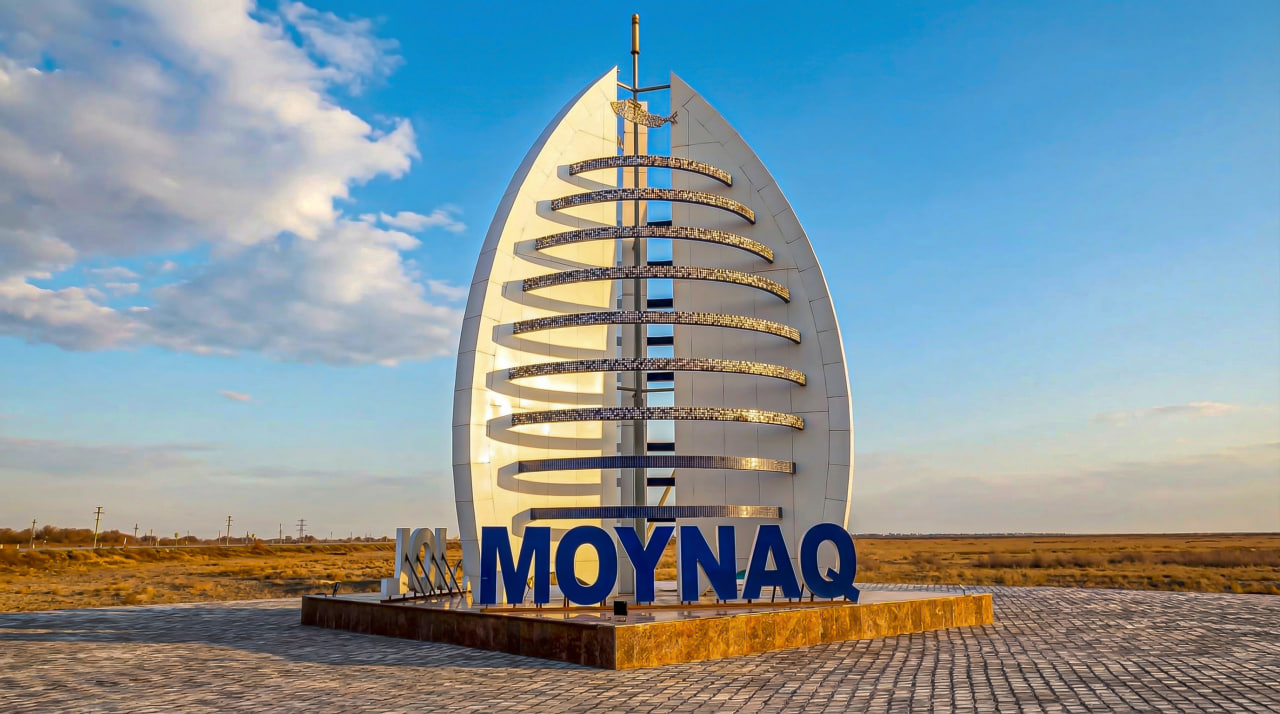
 Muynak, once a thriving port city in northern Uzbekistan, has gained a somber reputation in recent decades as a symbol of ecological disaster, caused by the shrinking of the Aral Sea, one of the largest inland bodies of water in the world.
In the mid-20th century, the Aral Sea was teeming with a diverse array of fish and served as a vital source of life for the local population, whose livelihoods depended on fishing. Over five hundred fishing vessels and barges navigated its waters, supporting a thriving industry. However, beginning in the 1960s, catastrophic changes began to unfold due to large-scale irrigation projects and the unsustainable use of water resources. Rivers that once fed the Aral Sea were redirected to meet the demands of agriculture, leading to a dramatic decline in the sea's water levels. As a result, the Aral Sea has receded over a hundred kilometers from its original shoreline, leaving behind the desolate salt flats of the Aralkum Desert.
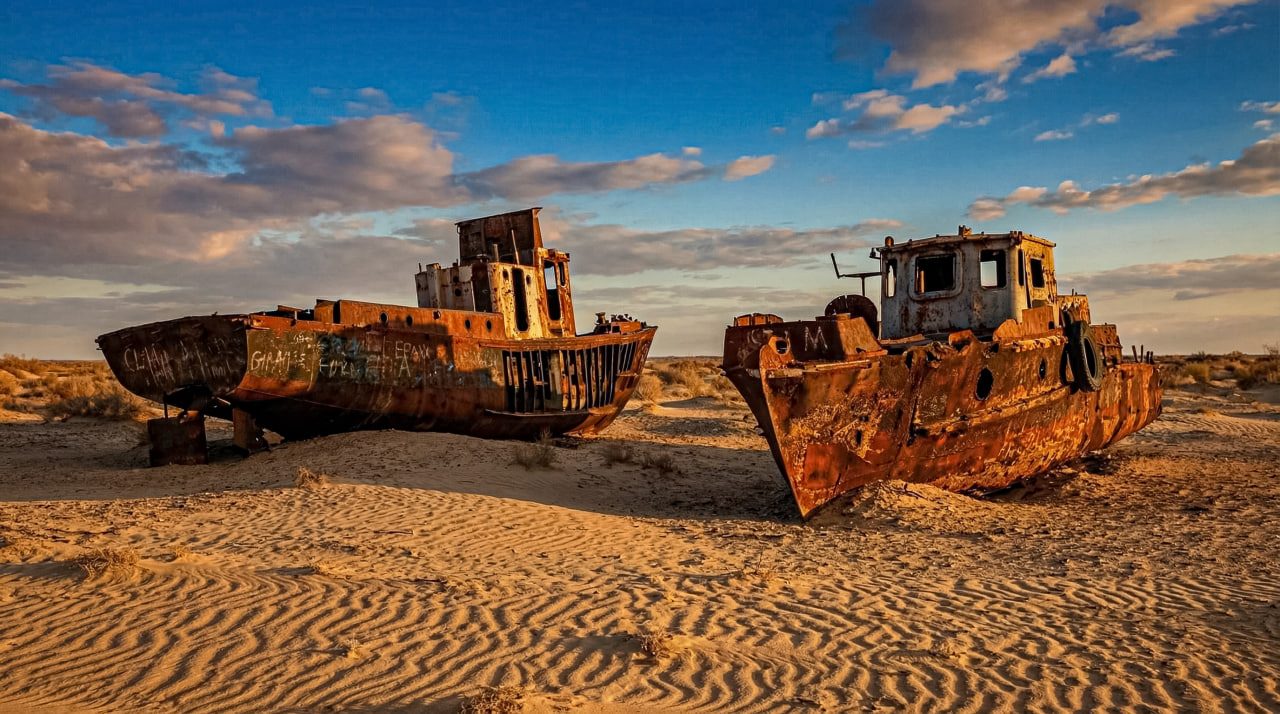 The legendary “Ship Graveyard” is an open-air museum located at the site of what was once a bustling maritime port in Muynak.
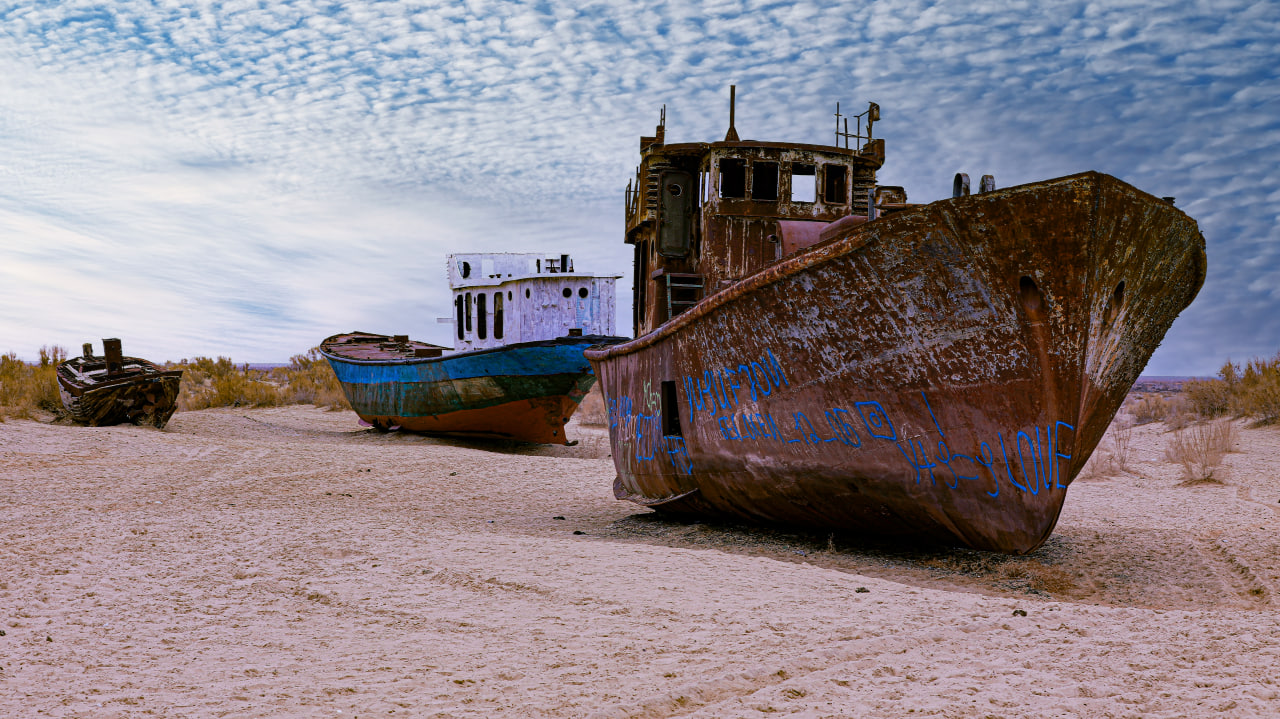 Rusting fishing vessels, rendered obsolete, now lie frozen on the exposed seabed of a once-thriving sea, symbolizing the lost grandeur of the Aral Sea.
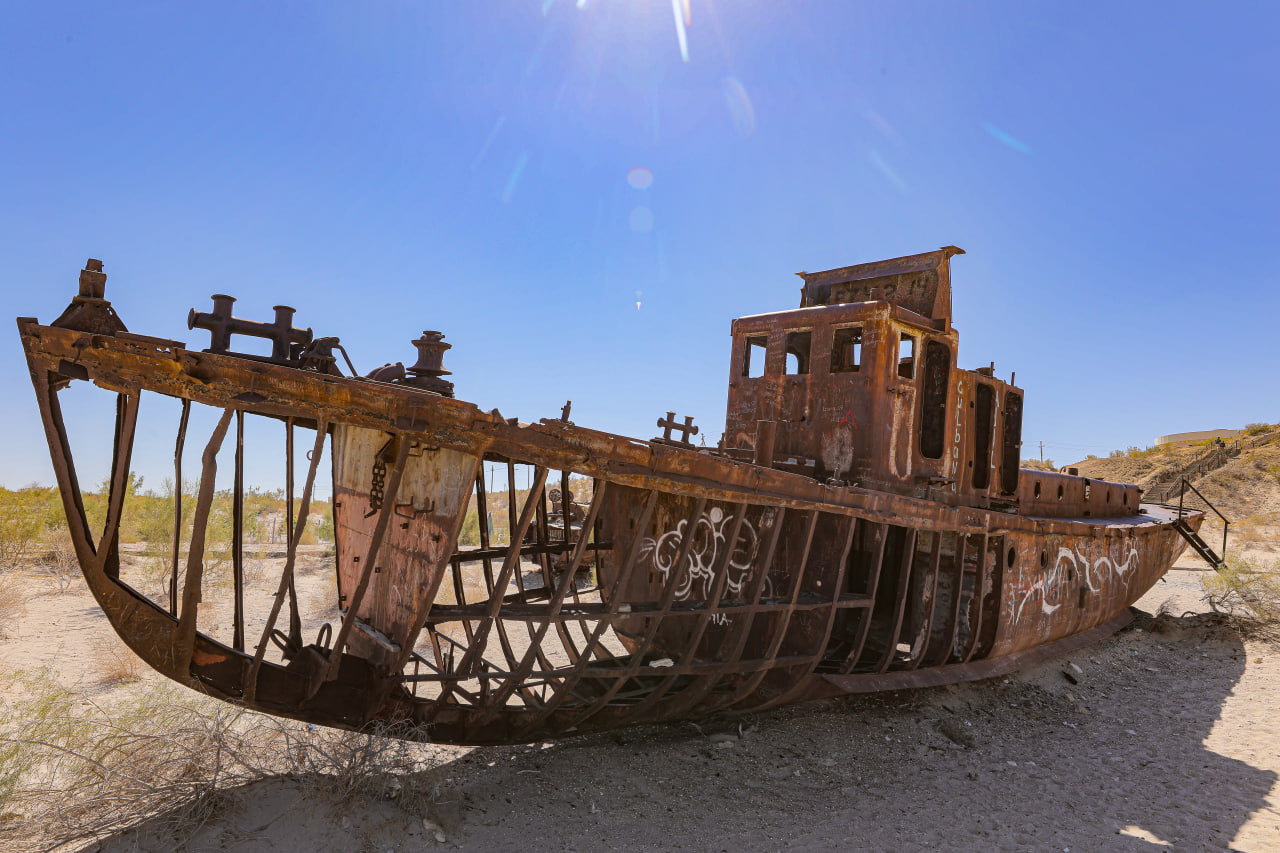 Here, visitors can witness a dozen ships resting on the sand, slowly succumbing to corrosion and decay. These vessels serve as poignant reminders of humanity's unsustainable use of water resources and its profound consequences for the region's ecosystem. The “Ship Graveyard” is not only a historical monument but also a place for deep reflection on the necessity of nurturing our natural environment and the responsible management of our natural resources.
Amidst the rusting hulls of the ships, one can feel the breath of history and the scale of the ecological disaster that has unfolded in the Aral Sea region.
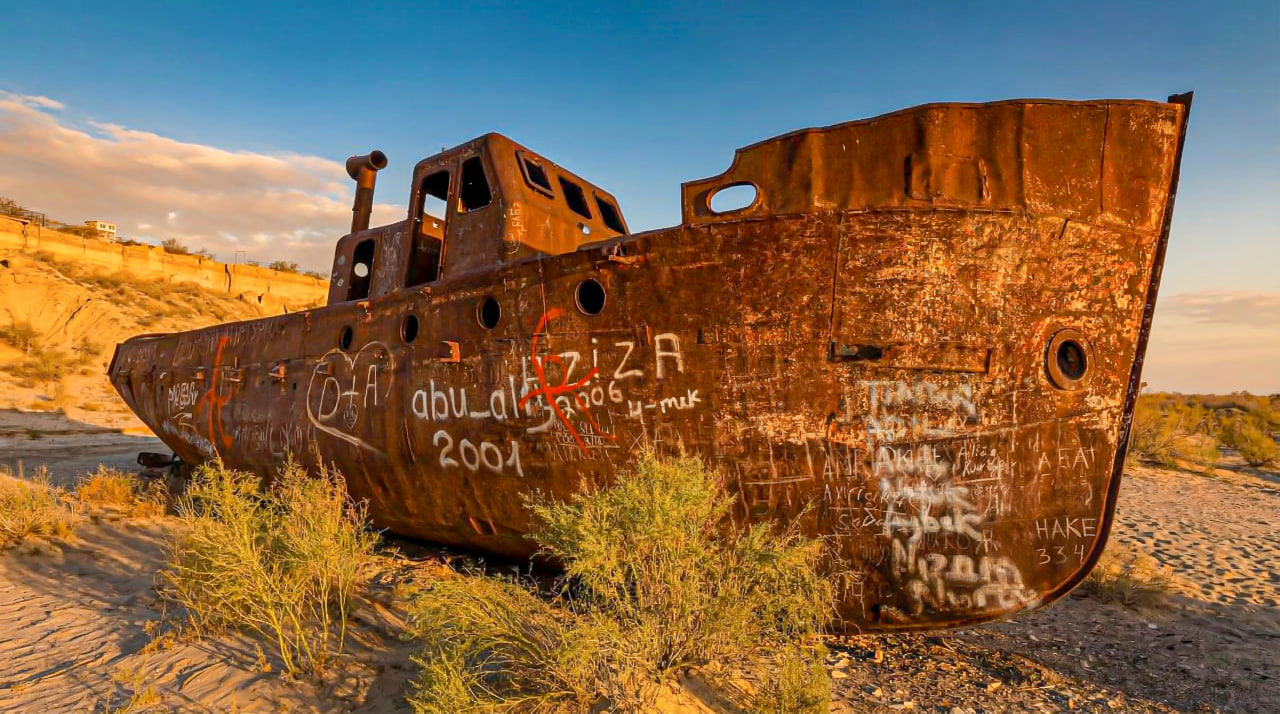 The skeletal remains of these vessels, resting on the exposed seabed, evoke images of gigantic whales stranded on the sand.
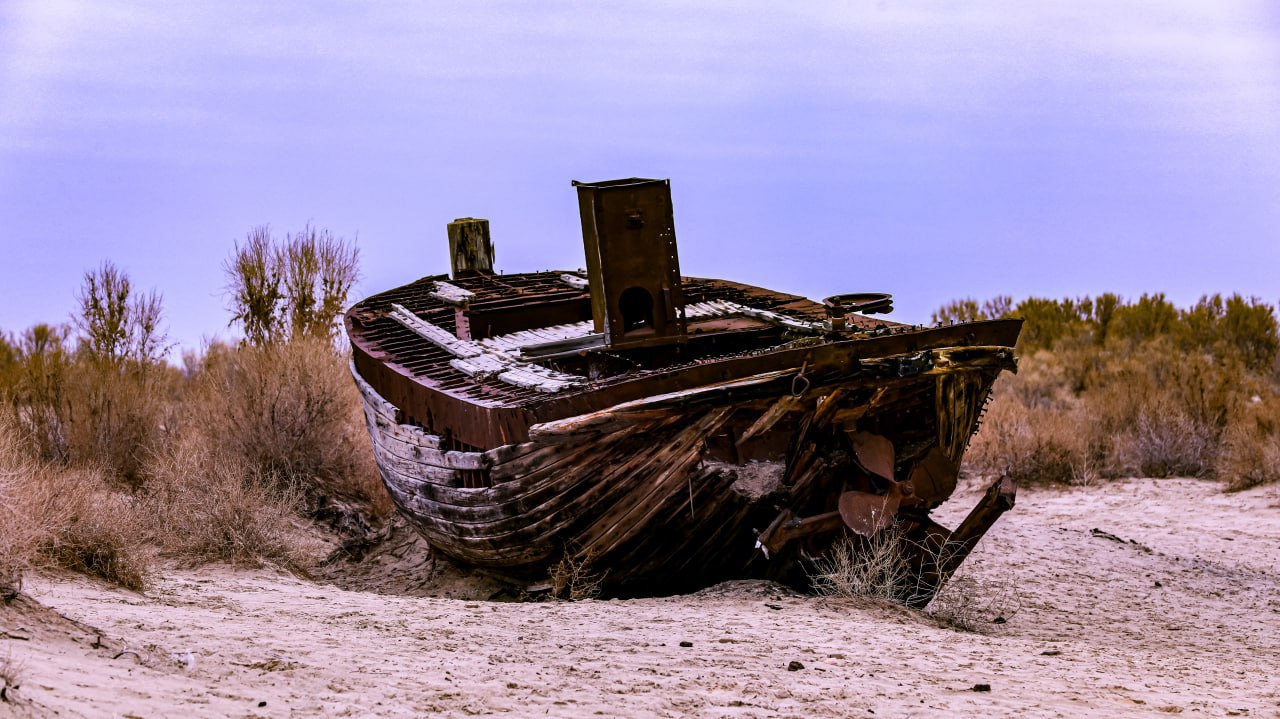 The landscape of the Aralkum Desert holds secrets of a distant past, when the ancient Tethys Ocean once ruled this area, showcasing underwater landscapes teeming with diverse forms of life.
This unique location, enveloped in an atmosphere of quiet melancholy, has become a popular tourist attraction in Karakalpakstan, offering jeep tours from Nukus. Visitors can admire the ships from an observation deck near the memorial dedicated to the Aral Sea and the Museum of the History of the Aral Sea, before descending to get a closer look at these haunting remnants. This captivating site draws travelers not only seeking to capture dramatic images but also those wishing to gain a deeper understanding of the tragedy that unfolded here.
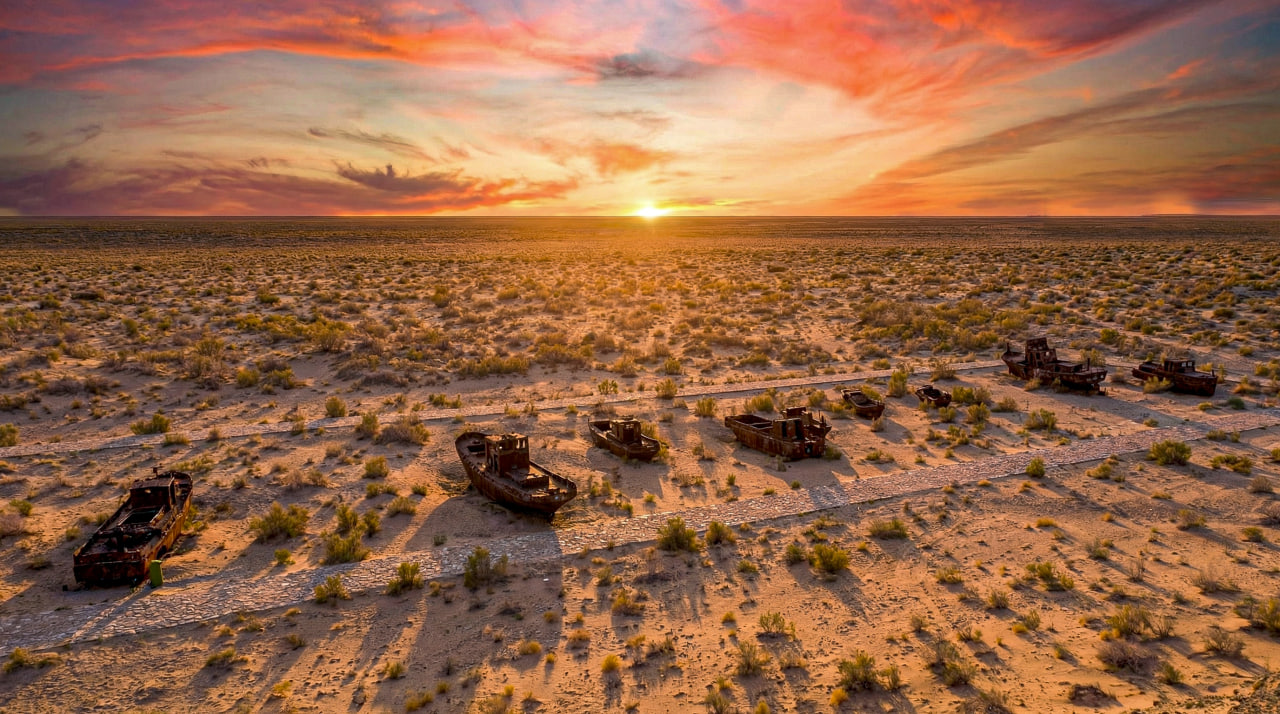 Every year, the “Ship Graveyard” hosts the vibrant festival of electronic music, science, and art known as “Stihia” which serves as a platform for creativity and a powerful tool for raising global awareness about the challenges facing the Aral Sea region. The atmosphere of this unique location captivates attendees and encourages deep reflection on the future of our planet and the responsibilities we hold for its preservation.
Location: Muynak District, Republic of Karakalpakstan
GPS coordinates: 43°47'24.5"N 59°02'02.3"E