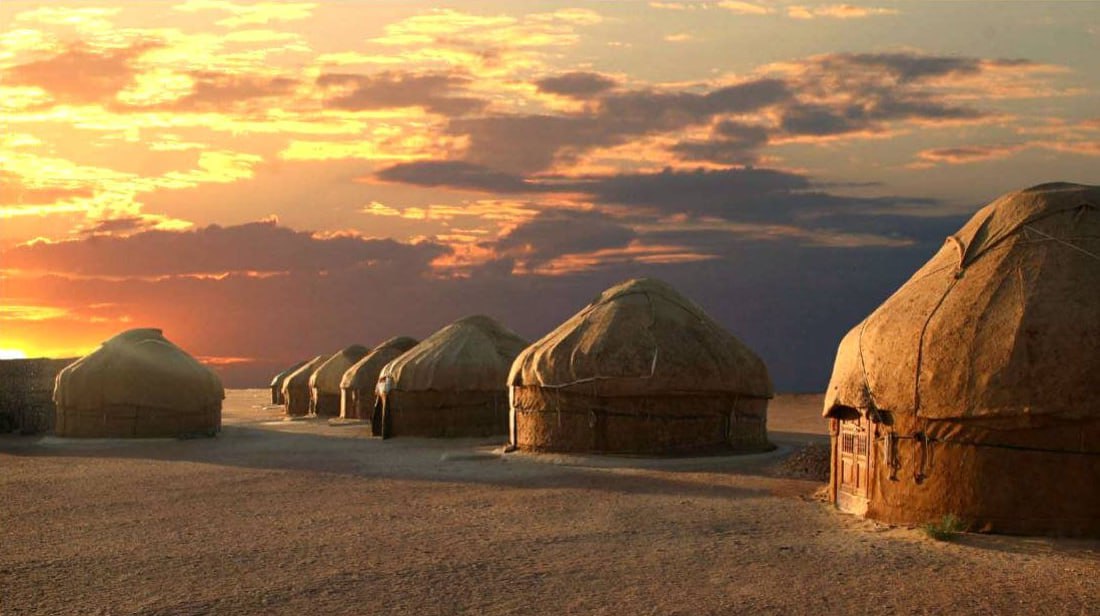
 The nomadic culture of Turkic peoples in Central Asia holds an important place in the historical heritage of the region. The yurt, as a traditional dwelling, symbolizes mobility and adaptability for life in harsh climatic conditions.
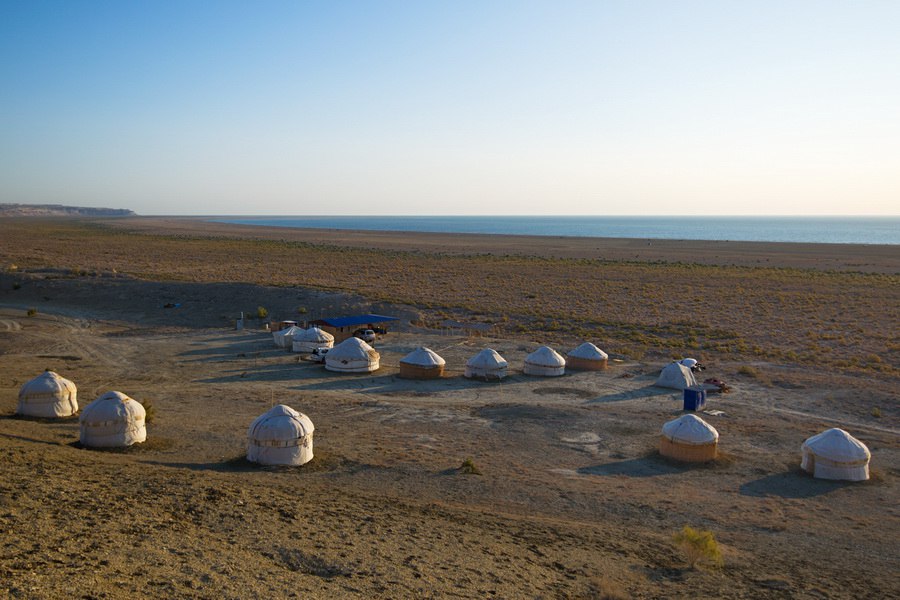 It reflects the harmonious interaction between humans and nature, with every element of its construction meticulously designed. The lightweight structure, portability, ease of assembly and disassembly, as well as the exclusive use of natural materials, make the yurt a practical and aesthetically pleasing choice for a nomadic lifestyle.
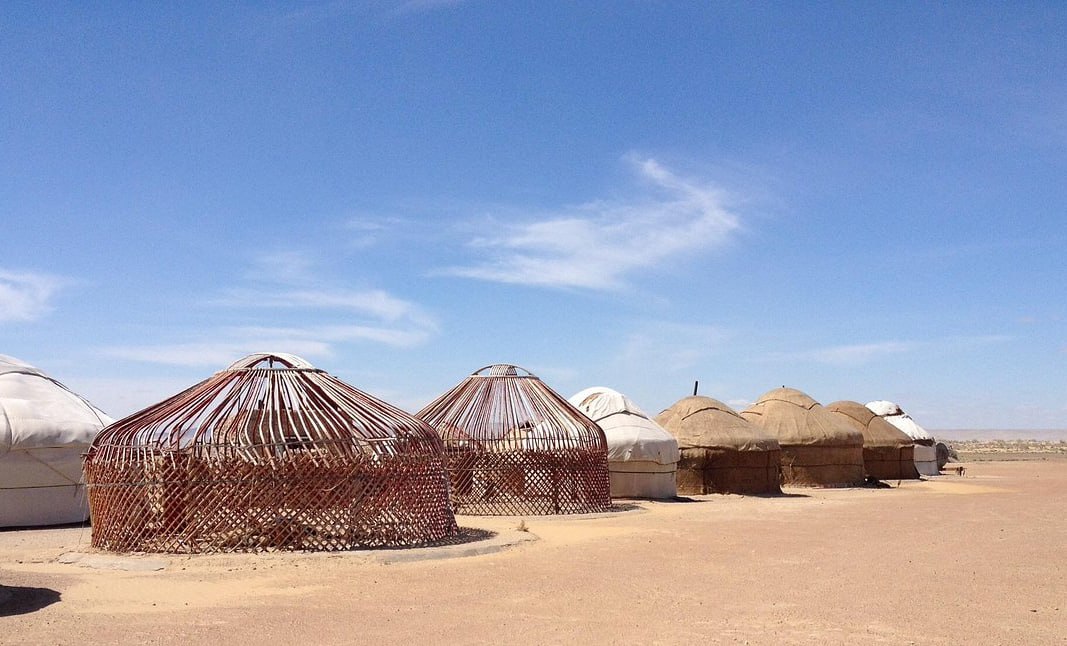 If the kobyz is the voice of the steppe, then the yurt is its architecture. The yurt is not just a dwelling; it is a symbol of national identity, preserving ancient traditions and customs. Setting up a yurt requires not only physical effort but also an artistry that demands deep knowledge and skill. Its interior represents a harmonious microcosm of order, where every detail holds significance, while the world beyond its felt walls shapes a broader universe.
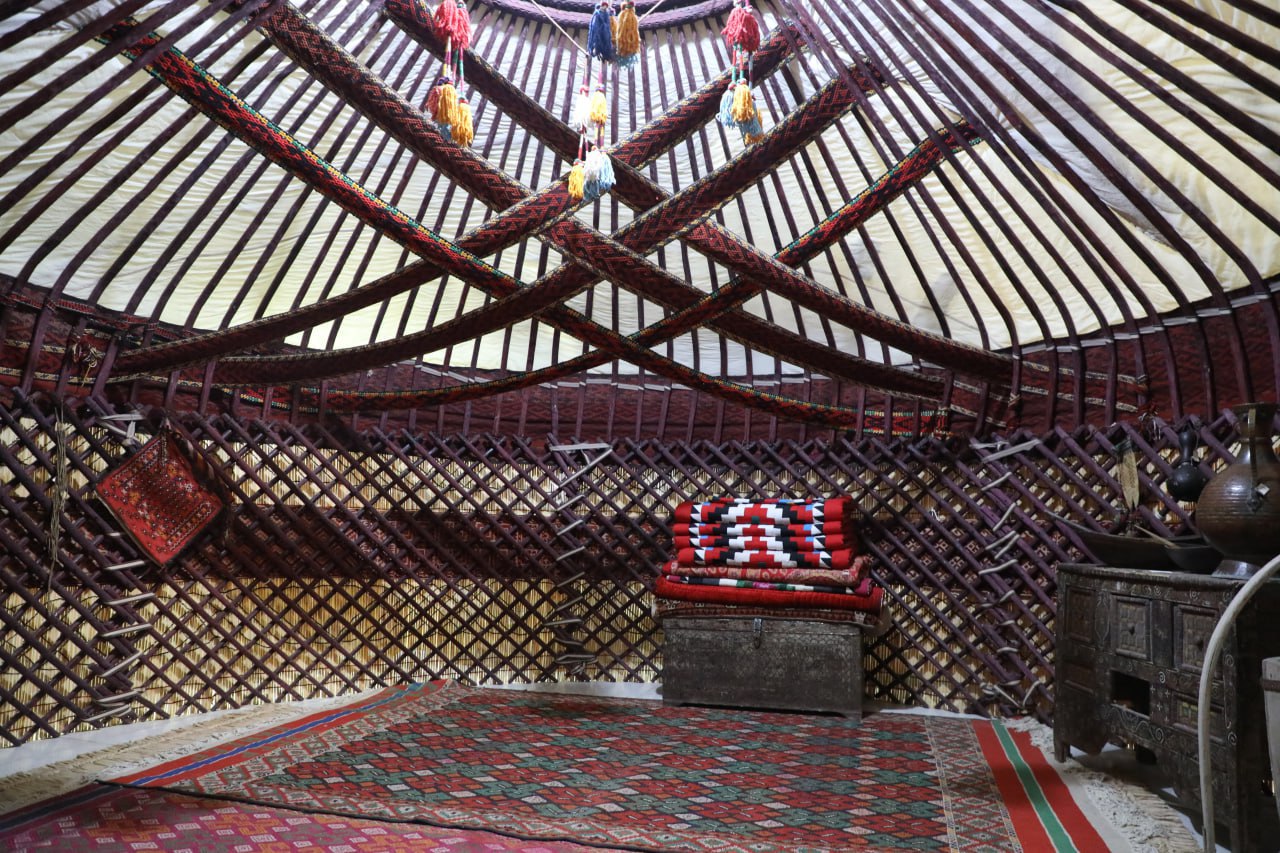 The selection of materials, the order of assembly, the techniques of decoration, and the symbolism of patterns are passed down from generation to generation, from master to apprentice, thereby creating a continuous cultural chain.
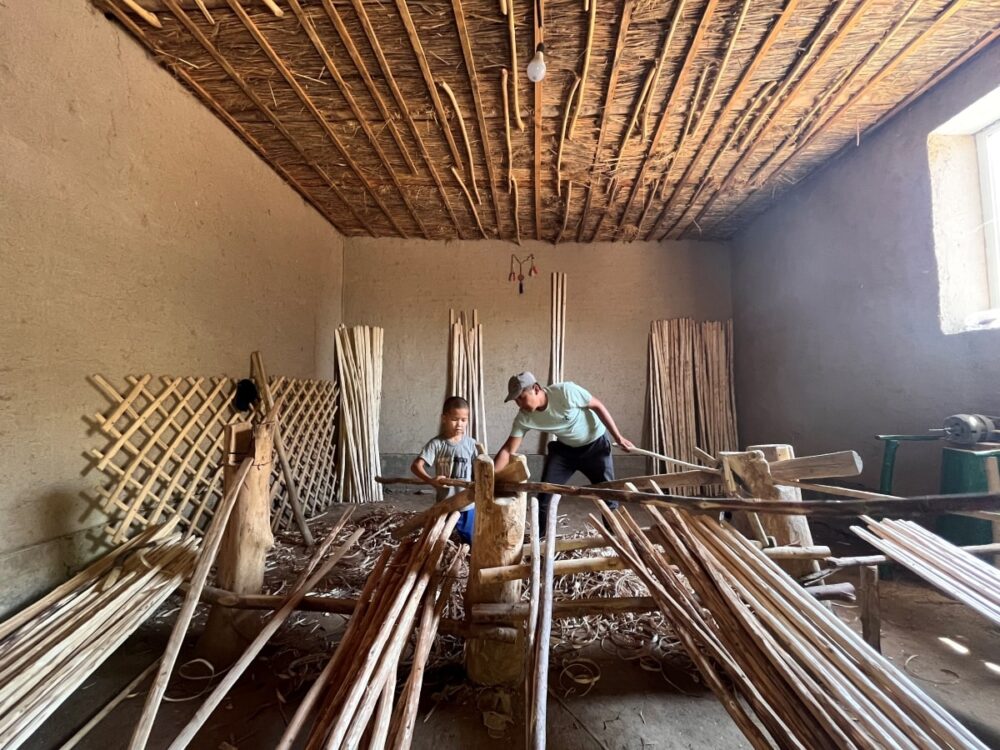 The Karakalpak yurt impresses with its unique construction and exquisite decorative elements. The patterns embody various aspects of life, natural motifs, and the traditions of the people. Wedding yurts, covered in white felt, symbolize joy and new beginnings, while ordinary yurts, known as kara-uy, are draped in dark felt. These contrasts in decoration create a harmony between aesthetics and practicality.
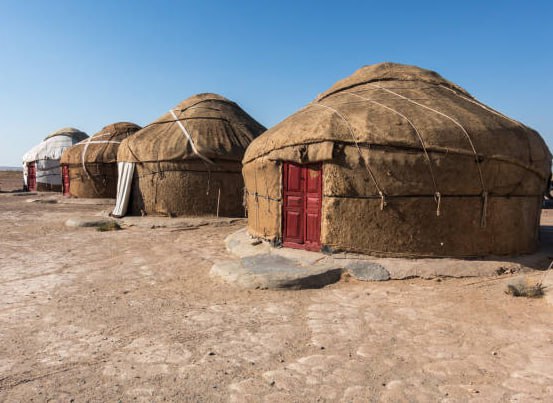 For the nomadic and semi-nomadic peoples of Central Asia, such as the Karakalpaks, Kazakhs, and Kyrgyz, the yurt remained the primary form of housing until the end of the 19th century. By the 1930s and 1940s, it continued to be predominantly used among herders during seasonal migrations.
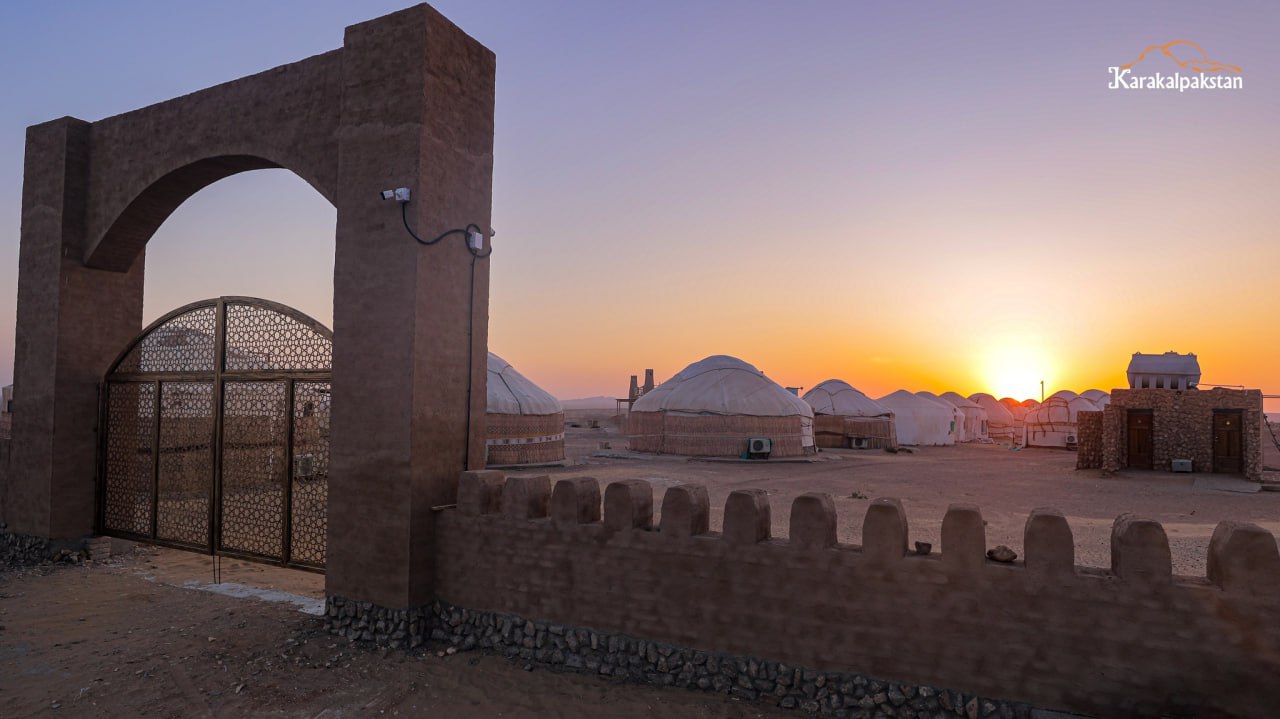
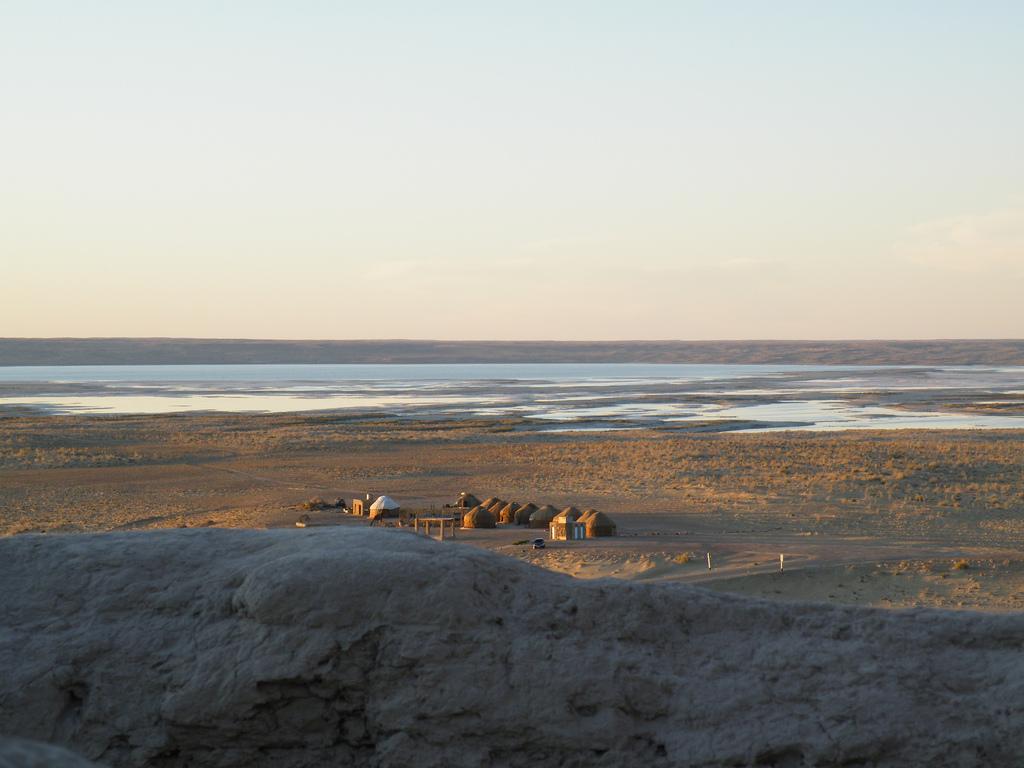 In the modern world, yurts have lost their original function as ordinary dwellings and have transformed into venues where visitors can immerse themselves in the nomadic lifestyle and traditions.
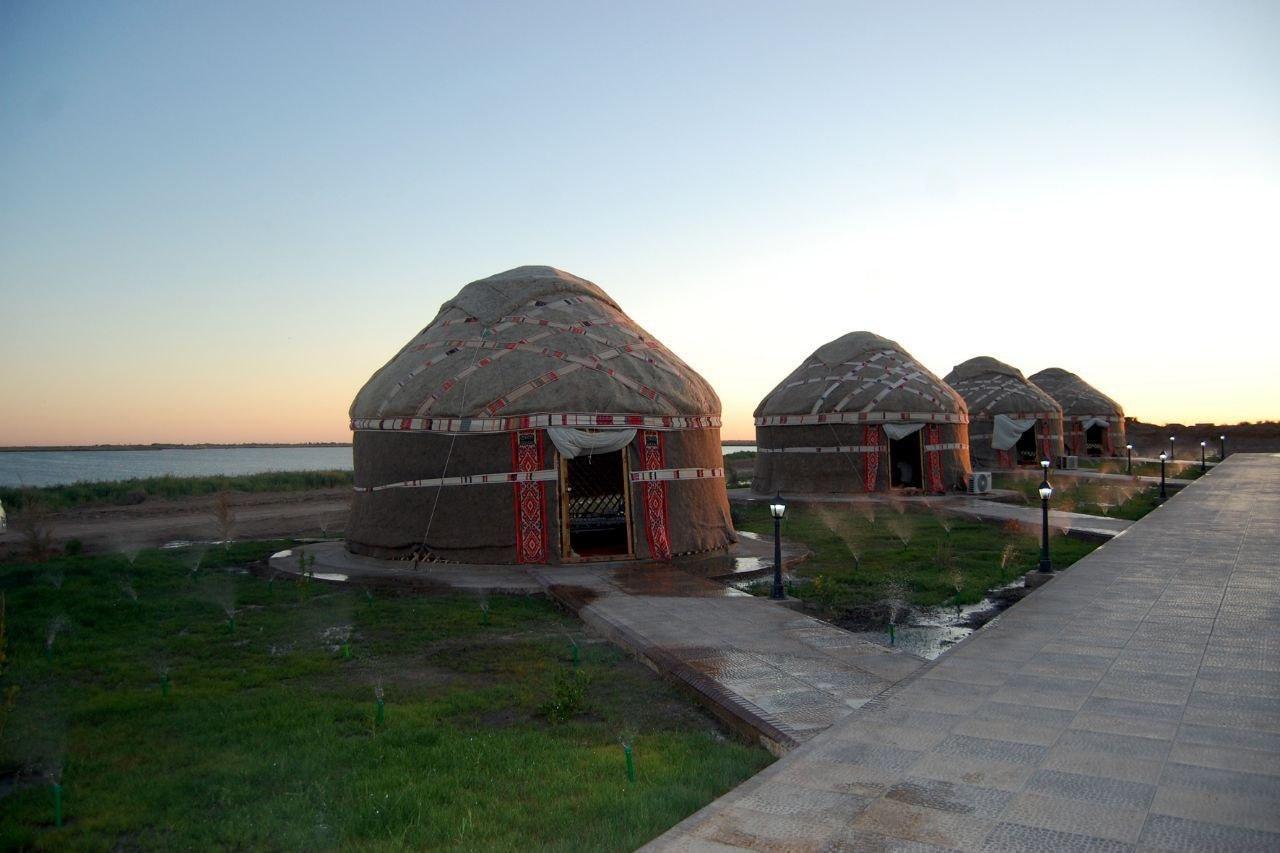 Ethnic villages are becoming important custodians of cultural heritage, opening their doors to those who seek to learn more about the richness of nomadic cultures. These places serve as bridges between the past and the present, strengthening the connection between generations and fostering the exchange of knowledge and experiences.
 At the 20th session of the Intergovernmental Committee for the Safeguarding of the Intangible Cultural Heritage of UNESCO, held in New Delhi, India, the traditional knowledge and skills related to the construction of yurts by the Karakalpak, Kazakh, and Kyrgyz peoples were inscribed on the Representative List of the Intangible Cultural Heritage of Humanity in Need of Urgent Safeguarding.
 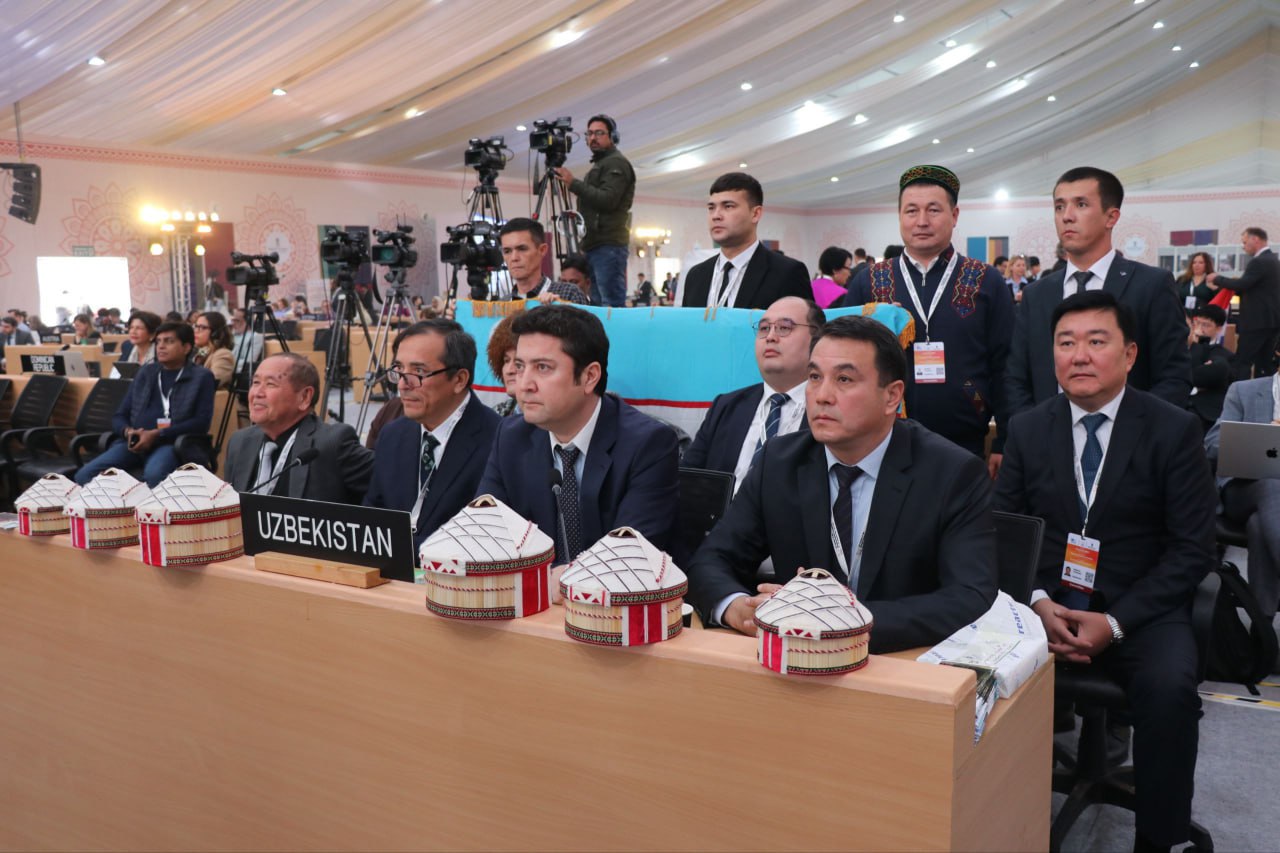 Preserving this heritage involves the transmission of craft skills, as well as governmental support and the promotion of the yurt as a symbol of historical memory and the worldview of the nomadic Turks. This decision represents a significant recognition of the craftsmanship and cultural importance of nomadic traditions, highlighting the historical value and artistry of folk artisans. It strengthens national identity and serves as an impetus for further exploration and promotion of Turkic cultural heritage on a global stage.