 The Karakalpak yurta is a symbol of nomadic architectural ingenuity and cultural identity. Skillfully designed, it combines mobility, allowing for easy movement across vast expanses, with adaptability to diverse climatic conditions. This unique structure not only serves as a cozy shelter but also embodies the harmonious coexistence of humans and nature. Due to its distinctive features, the yurta has become one of the most recognizable traditional dwellings in Central Asia, reflecting the richness and depth of nomadic culture.
 Historically, the Karakalpaks used two types of yurts, each with its unique purpose and varying degrees of wealth and decoration. The everyday "kara-ui" reflects practical significance - it was a standard, functional yurt whose appearance did not suggest elaborate decoration, characterized by the natural dark color of the felt. The "kara-ui" served as a daily dwelling.
 In contrast, the more ornate yurt was intended for newlyweds or for hosting guests. This ceremonial or festive yurt was called "ak otau" ("white yurt") and was covered with light-colored felt.
 Its unique ventilation system, based on the opening of side coverings, ensured a comfortable coolness inside, even when the sun was blazing at its zenith.
This harmony with nature and the ability to adapt to surrounding conditions highlight the wisdom and nomadic culture of the Karakalpaks. Their architectural choices reflect not only practical needs but also a deep understanding of their environment, showcasing the ingenuity and resilience that define their way of life.
The Karakalpak yurt can be assembled or disassembled in just a few hours. The process begins with the installation of the doorframe, after which 6, 8, or sometimes 12 folding wooden lattice sections, known as "kerege," are mounted.
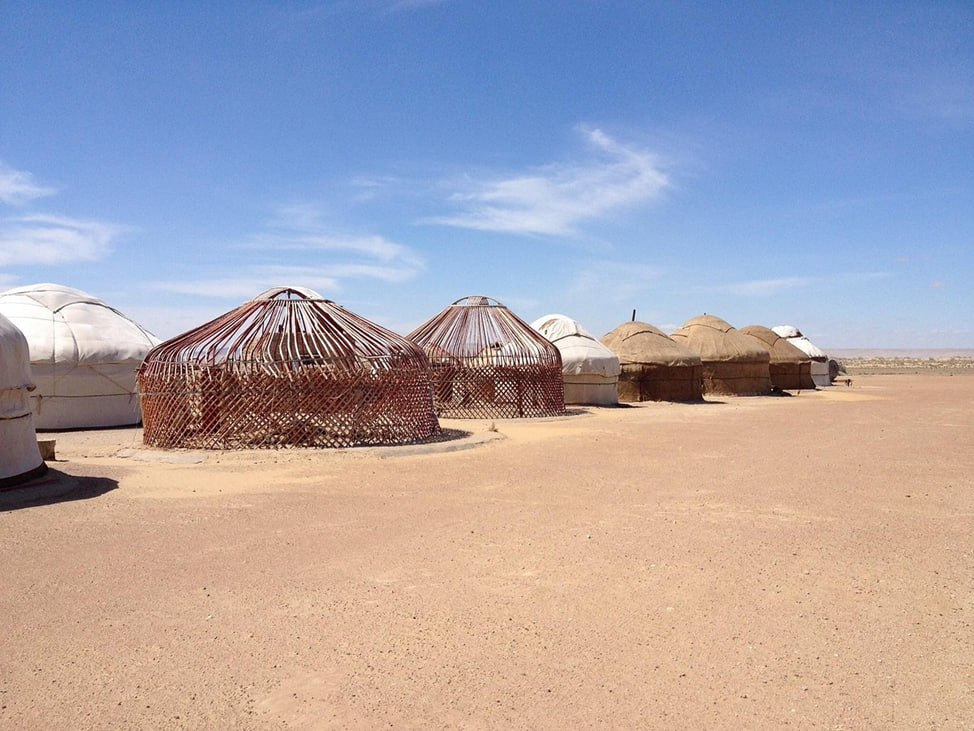 The conical roof is formed by straight poles secured with wide white bands and covered with felt and woven mats.
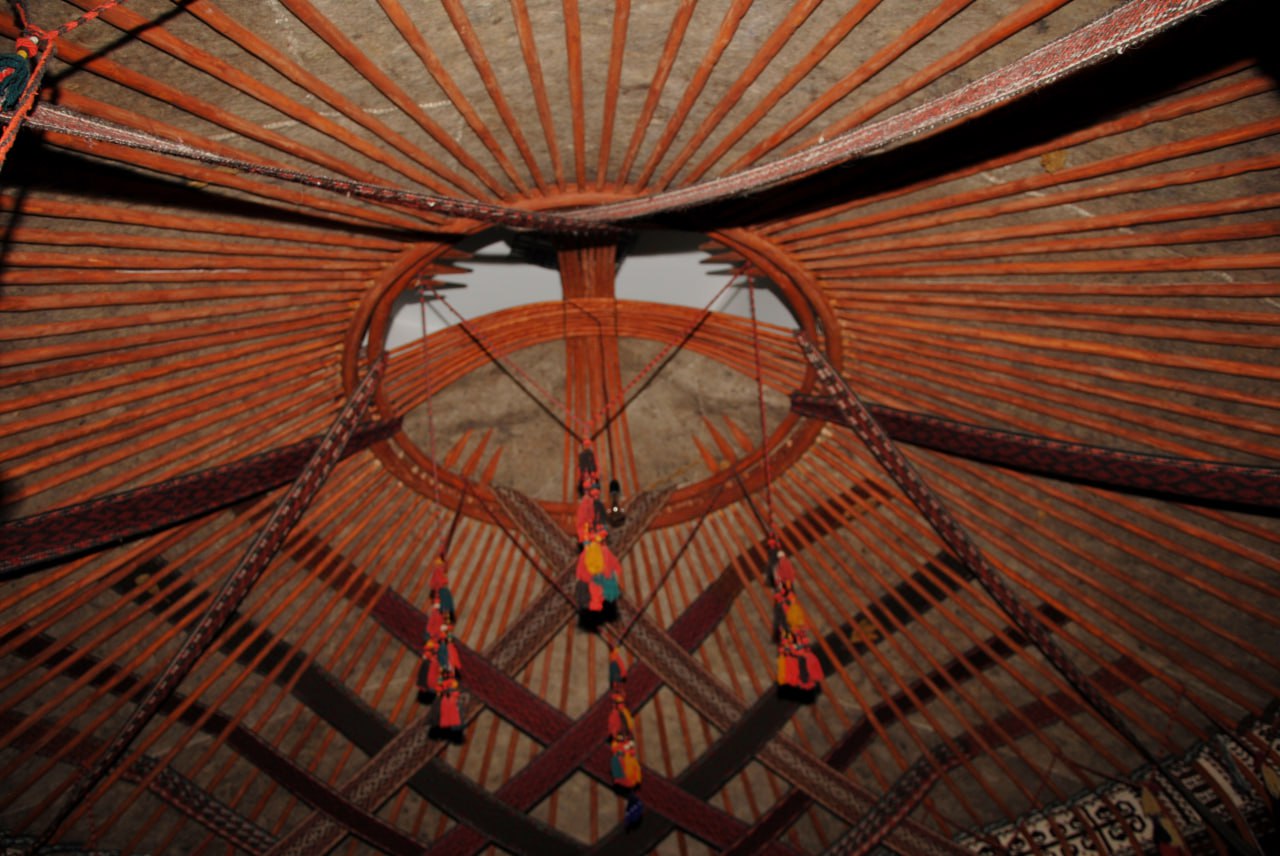 The internal space of the yurt is organized with a specific purpose and symbolism. It is divided into the male side (on-jak) and the female side (sol-jak), reflecting ancient beliefs about balance and cosmic harmony.
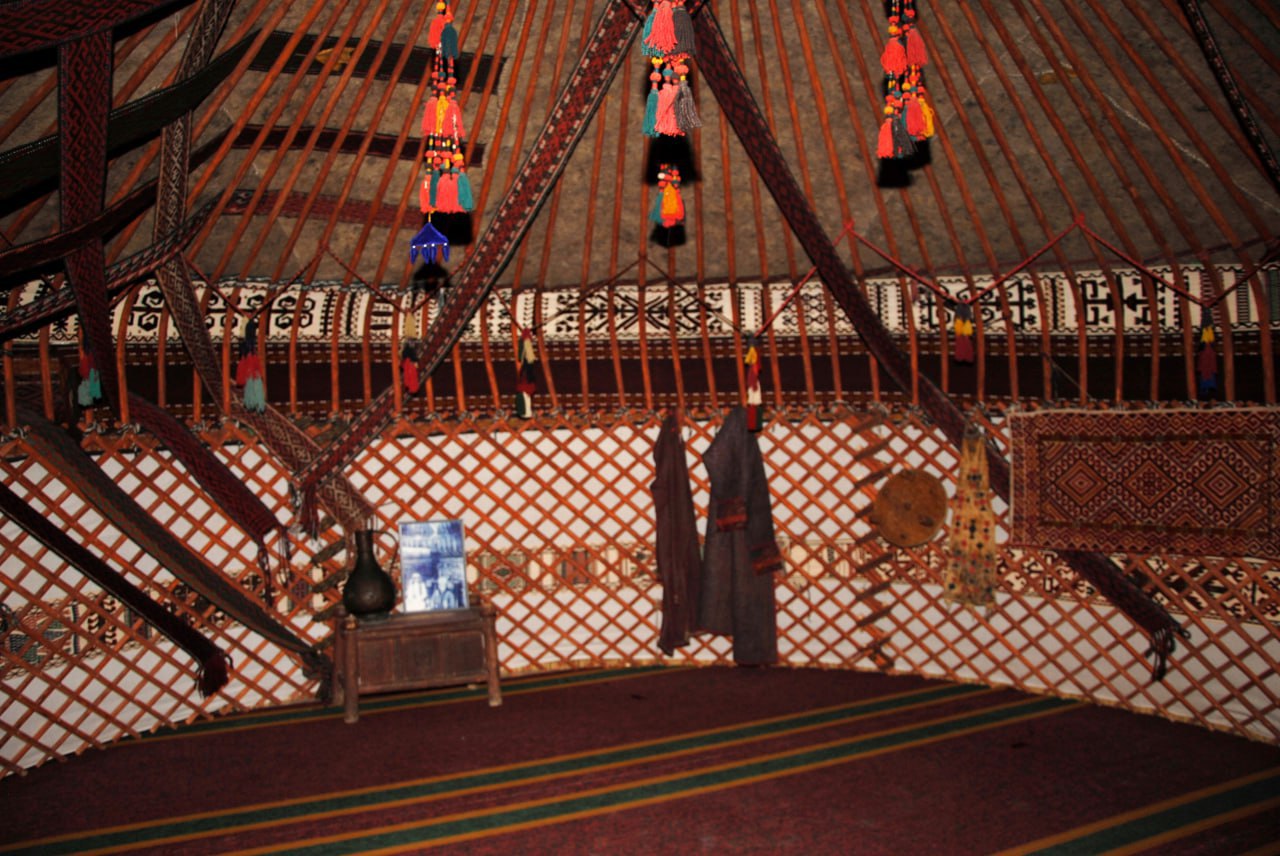
 Sacred elements within the yurt include the threshold (bosağa), the hearth (oshak), and the honored place (tōr), which is richly decorated and reserved for esteemed guests.
The entrance to a yurt is traditionally oriented to the south, which ensures optimal comfort at any time of the year.
 Each woven ribbon and every ornament serve both practical and symbolic functions, emphasizing the cultural significance of the yurt's interior design. This thoughtful arrangement not only fosters a sense of family community within the yurt but also strengthens the spiritual connection the Karakalpak people have with their surroundings and traditions. The division of space reflects the dualities present in nature and society, highlighting the importance of balance in everyday life. The rich decoration and careful attention to detail in these elements showcase the artistry and craftsmanship of Karakalpak culture, transforming the yurt from merely a shelter into a vibrant expression of their identity.
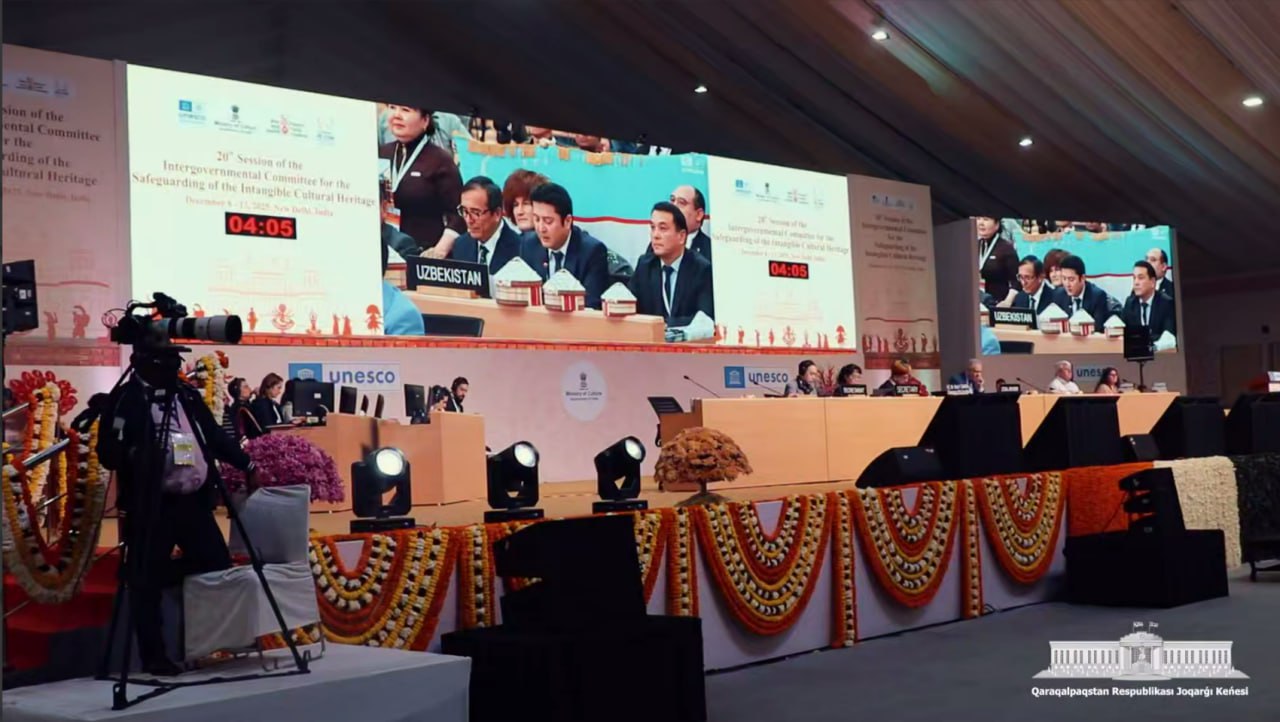
During the 20th session of the Intergovernmental Committee held in New Delhi, India, the traditional knowledge and skills involved in the creation of Karakalpak yurts were included in the representative list of UNESCO's intangible cultural heritage. This recognition highlights the significance of this traditional practice not only as part of the Karakalpak cultural identity but also as an important contribution to global heritage. Inclusion in this esteemed list fosters awareness and appreciation of the craftsmanship and cultural importance of yurts, ensuring the preservation of these traditions for future generations.
 The yurt embodies a cosmological worldview in which the dwelling, the surrounding nature, and the universe are intertwined in harmonious unity. This unique architectural style not only serves as a cozy home but also reflects a deep understanding of humanity's place in the world. The yurt is an intangible cultural heritage of Uzbekistan, symbolizing the traditions, customs, and values that preserve the spirit of ancient legends and the wisdom of ancestors. They viewed their home as a symbol of unity with the world around them.